Attention Kansas City real estate investors and income property owners from around the nation. Today BBQ Capital is bringing you a guest author by the name of Bill Roberts. I’ve never actually met Bill. But I like his stuff that he posts over at Active|Rain. So I asked him to share some of his thoughts with us. Leave feedback and let me know what you think.
***
 Retirement Planning is like planning for a trip. You can’t really do much planning if you don’t know where you want to end up. Just putting a little money aside with the idea that you’ll need it when you retire is kind of like just driving around aimlessly, you’ll end up somewhere, but not necessarily where you want to be.
So if we can agree that isn’t the best approach, then what is?
Well, the process is quite simple. You start by creating a budget of your living expenses that you’ll have when you retire. I wrote a couple of posts on this subject:
Fun With Ken and Barbie
Fun With Ken and Barbie, Part 2
Apples and Oranges
Now you need to adjust this number for the future because no matter what we do, the dollar is going to be worth less tomorrow than it is today. I like to use a 5% per year factor to make today’s apples equal tomorrow’s oranges. This isn’t rocket science and we’re not going to be accurate to six decimal places so I would just multiply the number of years until you expect to retire by 5% (i.e. 10 years time 5% equals 50%) then multiply your monthly budget by 1.0 plus the factor (i.e. 1.0 plus 50% equals 1.50 for our previous example). So if you need $10,000 per month now you’ll need $15,000 per month in 10 years.
Now we know how much we will need. Let’s compare that with what we know we’ll have:
Social security $ 2,500.00 per month
Company retirement plan $ 2,500.00 per month
IRA $ 1,250.00 per month
Total $ 6,250.00 per month
Options
Uh oh. It looks like we’ll be a little short. But don’t worry, we still have options.
First option: Work ‘til you die.
Second option: have more to retire on.
I’m going to assume that you have selected the second option. So the question is what can you do to have more to retire on?
I believe in the real estate market. I don’t believe in the stock market. I think that your IRA invested in real estate will be worth more in ten or fifteen years than it would be if you leave it where it is now. On average mutual funds historically yield about 8% per annum in earnings and growth combined. When you start drawing down your IRA for living expenses (this is called a distribution) it will affect the continued growth of the IRA. If your IRA is invested in annuities, stocks, and mutual funds or money market instruments it won’t be very big when you retire and your distributions will probably consume ALL of the accounts annual growth. It will stagnate or even grow smaller as you take out money to live on.
|
|
IRA at Normal Custodian |
|
|
|
|
| |
|
|
|
|
|
| Year |
Beginning $$ |
Contribution |
Balance w/ROI |
Anticipated Monthly Distribution |
| |
|
|
|
|
|
| 1 |
$ 50,000.00 |
$ 5,000.00 |
$ 59,400.00 |
$ 396.00 |
|
| 2 |
$ 59,400.00 |
$ 5,000.00 |
$ 69,552.00 |
$ 463.68 |
|
| 3 |
$ 69,552.00 |
$ 5,000.00 |
$ 80,516.16 |
$ 536.77 |
|
| 4 |
$ 80,516.16 |
$ 5,000.00 |
$ 92,357.45 |
$ 615.72 |
|
| 5 |
$ 92,357.45 |
$ 5,000.00 |
$ 105,146.05 |
$ 700.97 |
|
| 6 |
$ 105,146.05 |
$ 5,000.00 |
$ 118,957.73 |
$ 793.05 |
|
| 7 |
$ 118,957.73 |
$ 5,000.00 |
$ 133,874.35 |
$ 892.50 |
|
| 8 |
$ 133,874.35 |
$ 5,000.00 |
$ 149,984.30 |
$ 999.90 |
|
| 9 |
$ 149,984.30 |
$ 5,000.00 |
$ 167,383.04 |
$ 1,115.89 |
|
| 10 |
$ 167,383.04 |
$ 5,000.00 |
$ 186,173.69 |
$ 1,241.16 |
|
| 11 |
$ 186,173.69 |
$ 5,000.00 |
$ 206,467.58 |
$ 1,376.45 |
|
| 12 |
$ 206,467.58 |
$ 5,000.00 |
$ 228,384.99 |
$ 1,522.57 |
|
| 13 |
$ 228,384.99 |
$ 5,000.00 |
$ 252,055.79 |
$ 1,680.37 |
|
| 14 |
$ 252,055.79 |
$ 5,000.00 |
$ 277,620.25 |
$ 1,850.80 |
|
| 15 |
$ 277,620.25 |
$ 5,000.00 |
$ 305,229.87 |
$ 2,034.87 |
|
| 16 |
$ 305,229.87 |
$ 5,000.00 |
$ 335,048.26 |
$ 2,233.66 |
|
| 17 |
$ 335,048.26 |
$ 5,000.00 |
$ 367,252.12 |
$ 2,448.35 |
|
| |
|
|
|
|
|
Compare that to a real estate investment that grows 5% per annum, but you only put 50% down. This gives you a 5% return on your investment PLUS a 5% return on the portion financed. Your actual yield is approximately 10% PLUS you have income from the investment. Think how much your return would be if you only had to put 20% down.
Now all this is great, but your IRA custodian won’t let you invest in real estate.
Of course they won’t. The custodian is associated with the company that invests your funds and they are an insurance company, stock broker or mutual fund company. What you need is a custodian that will allow you to invest in real estate.
Now this isn’t impossible, but it is a little more difficult than signing up with Fidelity or somebody like that.
The Self-Directed IRA
If You Haven’t Saved Enough Money to Retire You Better Read This
What you need to do is to sign up with a custodian that allows self-directed IRAs.
Once your self-directed IRA is established you can roll over your existing IRA into your new IRA. Then you will need an LLC with a special operating agreement (that satisfies the IRS) to hold your IRA real estate investments. The whole process to establish your IRA and setup your LLC will cost from one thousand dollars to five thousand dollars depending on who you sign up with. This will give you “check book” control of your IRA investments.
Now you want to aggressively put your money into good growth potential investment property. You want to be aggressive because you know that if your IRA doesn’t grow fast enough and big enough you won’t be able to retire.
A nice side benefit of having your real estate portfolio in your IRA is that you no longer need to do §1031 exchanges. You can just sell and keep all the profit in your IRA. Understand that your IRA grows tax free or tax deferred (depending on whether it is a Roth or Traditional IRA) and therefore a §1031 tax deferred exchange is not necessary.
I prepared an excel spreadsheet for an investment program where the investor utilizes a self-directed IRA to purchase small residential income properties that need some help to realize their potential. Some people call these “fixer uppers.” In the case of the first property we will sell it as soon as the increase in value is enough to give us the down payment on a larger property. After that, we will purchase additional properties utilizing cash flow and cash-out financing. Remember, this is an aggressive approach because we don’t have that many years to acquire enough money in our IRA to guarantee a comfortable retirement.
Once we are approaching retirement, we want to sell our residential income property (because it is “management intensive”) and use the proceeds to build a commercial strip center. This will give us continued growth and good cash flow with much less demands on our time for management.
Self-Directed IRA Real Estate Investment Program
|
|
|
|
|
|
|
|
| |
|
|
|
|
|
|
| Year |
Beginning $$ |
Contribution $$ |
Investment Description |
Buy |
Sell |
Value $$ |
| |
|
|
|
|
|
|
| 0 |
|
$ 50,000.00 |
roll over from IRA |
|
|
|
| 1 |
$ 50,000.00 |
$ 5,000.00 |
123 Ash St. Duplex |
X |
|
$ 250,000.00 |
| 2 |
$ 5,000.00 |
$ 5,000.00 |
123 Ash St Improvement |
|
|
|
| 3 |
$ 5,000.00 |
$ 5,000.00 |
|
|
|
|
| 4 |
$ 17,500.00 |
$ 5,000.00 |
123 Ash St Sold |
|
X |
$ 325,000.00 |
| 4 |
$ 130,000.00 |
|
456 Beech 4 Plex |
X |
|
$ 400,000.00 |
| 5 |
$ 50,000.00 |
$ 5,000.00 |
456 Beech Improvement |
|
|
|
| 6 |
$ 20,000.00 |
$ 5,000.00 |
456 Beech Improvement |
|
|
|
| 7 |
$ 30,000.00 |
$ 5,000.00 |
|
|
|
|
| 8 |
$ 70,000.00 |
$ 5,000.00 |
890 Dogwood St. Duplex |
X |
|
$ 250,000.00 |
| 9 |
$ 65,000.00 |
$ 5,000.00 |
890 Dogwood St. Improvement |
|
|
|
| 10 |
$ 95,000.00 |
$ 5,000.00 |
77 Sunset Blvd. 12 unit fixer |
X |
|
$ 1,000,000.00 |
| 11 |
$ 60,000.00 |
$ 5,000.00 |
77 Sunset Blvd. Improvement |
|
|
|
| 12 |
$ 40,000.00 |
$ 5,000.00 |
|
|
|
|
| 13 |
$ 130,000.00 |
$ 5,000.00 |
456 Beech Sold |
|
X |
$ 795,000.00 |
| 13 |
$ 650,000.00 |
|
890 Dogwood St. Sold |
|
X |
$ 450,000.00 |
| 13 |
$ 883,000.00 |
|
77 Sunset Blvd Sold |
|
X |
$ 1,425,000.00 |
| 14 |
$1,333,000.00 |
|
Commercial Strip Center Build |
X |
|
$ 5,000,000.00 |
| 15 |
$ 333,000.00 |
|
Commercial Lot |
X |
|
$ 700,000.00 |
| 16 |
$ 153,000.00 |
|
|
|
|
|
| 17 |
$ 176,000.00 |
|
Commercial Strip Center Build |
|
|
$ 5,000,000.00 |
| 18 |
$ 103,000.00 |
|
|
|
|
|
Right Half of Above Chart
|
|
|
|
|
|
|
|
| |
|
|
|
|
|
|
| Invest $$ |
Mortgage |
Income |
Sold |
Mortgage Paid |
$$ Avail to Invest |
|
| |
|
|
|
|
|
|
| |
|
|
|
|
|
|
| $ 50,000.00 |
$ 200,000.00 |
$ – |
|
|
$ 5,000.00 |
|
| $ 10,000.00 |
|
$ 5,000.00 |
|
|
$ 5,000.00 |
|
| |
|
$ 7,500.00 |
|
|
$ 17,500.00 |
|
| |
|
$ 5,000.00 |
$ 300,000.00 |
$ 197,500.00 |
$ 130,000.00 |
|
| $ 80,000.00 |
$ 320,000.00 |
|
|
|
$ 50,000.00 |
|
| $ 50,000.00 |
|
$ 15,000.00 |
|
|
$ 20,000.00 |
|
| $ 20,000.00 |
|
$ 25,000.00 |
|
|
$ 30,000.00 |
|
| |
|
$ 35,000.00 |
|
|
$ 70,000.00 |
|
| $ 50,000.00 |
$ 200,000.00 |
$ 40,000.00 |
|
|
$ 65,000.00 |
|
| $ 25,000.00 |
|
$ 50,000.00 |
|
|
$ 95,000.00 |
|
| $ 100,000.00 |
$ 900,000.00 |
$ 60,000.00 |
|
|
$ 60,000.00 |
|
| $ 100,000.00 |
|
$ 75,000.00 |
|
|
$ 40,000.00 |
|
| |
|
$ 85,000.00 |
|
|
$ 130,000.00 |
|
| |
|
$ 50,000.00 |
$ 750,000.00 |
$ 285,000.00 |
$ 650,000.00 |
|
| |
|
|
$ 420,000.00 |
$ 187,000.00 |
$ 883,000.00 |
|
| |
|
|
$ 1,350,000.00 |
$ 900,000.00 |
$ 1,333,000.00 |
|
| $ 1,000,000.00 |
$ 2,000,000.00 |
$ – |
|
|
$ 333,000.00 |
|
| $ 300,000.00 |
$ 400,000.00 |
$ 120,000.00 |
|
|
$ 153,000.00 |
|
| |
|
$ 123,000.00 |
|
$ 100,000.00 |
$ 176,000.00 |
|
| $ – |
$ 2,000,000.00 |
$ 127,000.00 |
|
$ 200,000.00 |
$ 103,000.00 |
|
| |
|
$ 250,000.00 |
|
$ 100,000.00 |
$ 253,000.00 |
|
You may open the actual Excel spreadsheet here.
Now as you can see, with aggressive investing in real estate with your Self-Directed IRA you should be able to reach (and even exceed) your retirement goals.
If you need help setting up your self-directed IRA, contact Bill Roberts at Brooks and Dunphy Financial (619) 244-4610. We provide everything you need to get started for $995.00.
See Chris Lengquist for investing in residential income property in the greater Kansas City area at (913) 322-7515.
 Client Profile: Working professional. High credit score. Cash to invest greater than $15,000. Other retirement vehicles in play including home equity, 401K and/or IRA, stocks, mutual funds and/or bonds.
 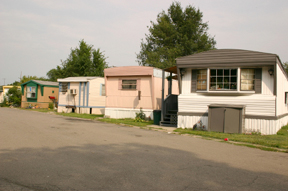 People will jump on me immediately and say “Chris! What about people who cannot afford $750/mo rent? Do you not like working class people?”
 don’t come from a privileged background and have had to earn everything I have. I could not have done it without the love and support of Marie. Let me give you an example.
 Kansas City real estate investing has some very exciting things going on right now for those that find themselves “in the know.” Here are a couple of things that I can make you aware of:


 shed his check, and since his savings account shows up on my electronic banking I noticed that he only deposited roughly 6% of his check. Immediately, I confronted him and asked him “What’s up?”
  BBQ Capital | Kansas City Real Estate Investing